
Diabetes Education Services
What We Say Matters: Language that Respects the Individual and Imparts Hope | 0.75 CEs
What We Say Matters: Language that Respects the Individual and Imparts Hope | 0.75 CEs
Share with your colleagues
Couldn't load pickup availability
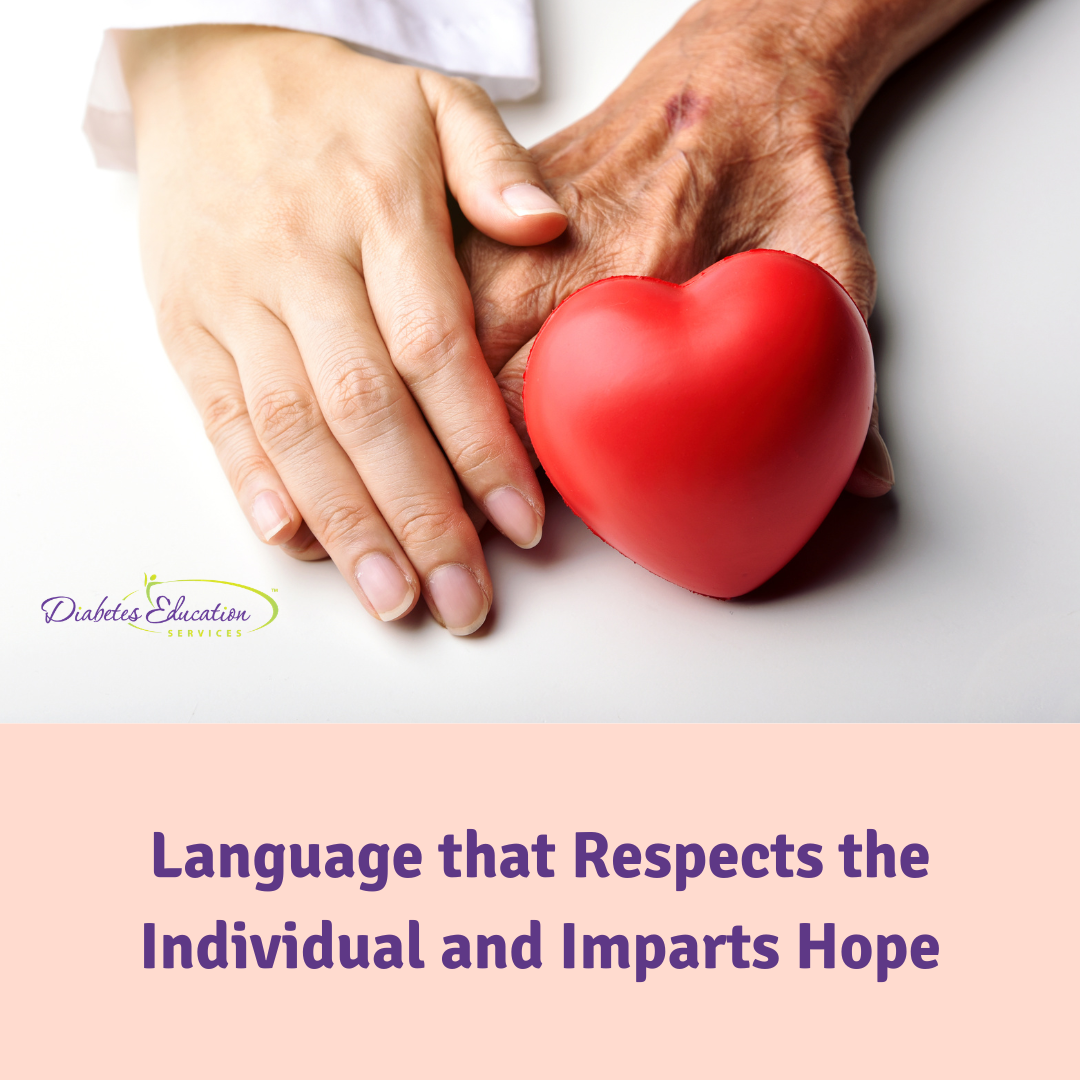
What We Say Matters
Language that Respects the Individual and Imparts Hope
Learn to use language that respects, empowers, and imparts hope.
As educators, advocates, spouses, friends, and providers, our use of language can deeply affect the self-view of people living with diabetes every day. Intentional communication is a powerful tool that can uncover trauma, identify barriers, and move both the provider and person with diabetes toward a greater understanding of the issues involved. The language used in the health care setting is immensely important in determining trust, mutual respect, and meaningful long-term relationships.
Many people with diabetes have experienced injustice, trauma, and marginalization, and are often struggling with feelings of shame and blame. This course provides practical guidance on using person-centered, trauma-informed language that builds trust and supports healing.
"I had my entire staff participate in the webinar and we all gained a lot from it. Thank you!" - Dawn F.
Course Topics:
- Learn phrases, words, and approaches that can be left behind
- Describe diabetes language that is respectful, inclusive, person-centered, and imparts hope
- Discuss how to evaluate for ACE and provide trauma-informed care
- Practice communicating about diabetes using phrases free from judgment with a focus on a strength-based approach
Course Objectives:
Upon completion of this activity, participants will be able to:
- Integrate person-centered communication, trauma-informed care, and behavior change strategies, including motivational interviewing, to address barriers to self-care and support individuals managing diabetes in complex psychosocial and medical situations.
- Conduct comprehensive assessments, such as foot risk evaluations and social determinants of health, to inform prevention and care planning in high-risk populations.
What's Included:
- 0.75 CE credits (AMA PRA Category 1™, ACPE, ANCC, CDR accredited)
- On-demand course with video presentation, podcast, and downloadable resources
- 1 full year of access to all course materials
- Activity dates: 5/13/2026 to 5/13/2028
- Estimated completion time: 45 minutes
Expert Instructor: Beverly Thomassian, RN, MPH, CDCES, BC-ADM, brings extensive expertise in person-centered communication, trauma-informed care, and compassionate diabetes education.
Perfect for: RNs, RDNs, pharmacists, providers, and healthcare professionals seeking to improve their communication skills and create healing, judgment-free spaces for people with diabetes
Part of Our Training Programs: This course is included in Level 4 | Advanced Level Topics, the Virtual DiabetesEd Training Conference, Certification Renewal Bundle, and all CDCES and BC-ADM Boot Camps.
Accredited by: AMA PRA Category 1™, ACPE, ANCC, CDR! More details in the "Accreditation" tab below.
Evidence-Based. Person-Centered. Practical.
What We Say Matters
Language that Respects the Individual and Imparts Hope
Learn to use language that respects, empowers, and imparts hope.
As educators, advocates, spouses, friends, and providers, our use of language can deeply affect the self-view of people living with diabetes every day. Intentional communication is a powerful tool that can uncover trauma, identify barriers, and move both the provider and person with diabetes toward a greater understanding of the issues involved. The language used in the health care setting is immensely important in determining trust, mutual respect, and meaningful long-term relationships.
Many people with diabetes have experienced injustice, trauma, and marginalization, and are often struggling with feelings of shame and blame. This course provides practical guidance on using person-centered, trauma-informed language that builds trust and supports healing.
"I had my entire staff participate in the webinar and we all gained a lot from it. Thank you!" - Dawn F.
Course Topics:
- Learn phrases, words, and approaches that can be left behind
- Describe diabetes language that is respectful, inclusive, person-centered, and imparts hope
- Discuss how to evaluate for ACE and provide trauma-informed care
- Practice communicating about diabetes using phrases free from judgment with a focus on a strength-based approach
Course Objectives:
Upon completion of this activity, participants will be able to:
- Integrate person-centered communication, trauma-informed care, and behavior change strategies, including motivational interviewing, to address barriers to self-care and support individuals managing diabetes in complex psychosocial and medical situations.
- Conduct comprehensive assessments, such as foot risk evaluations and social determinants of health, to inform prevention and care planning in high-risk populations.
What's Included:
- 0.75 CE credits (AMA PRA Category 1™, ACPE, ANCC, CDR accredited)
- On-demand course with video presentation, podcast, and downloadable resources
- 1 full year of access to all course materials
- Activity dates: 5/13/2026 to 5/13/2028
- Estimated completion time: 45 minutes
Expert Instructor: Beverly Thomassian, RN, MPH, CDCES, BC-ADM, brings extensive expertise in person-centered communication, trauma-informed care, and compassionate diabetes education.
Perfect for: RNs, RDNs, pharmacists, providers, and healthcare professionals seeking to improve their communication skills and create healing, judgment-free spaces for people with diabetes
Part of Our Training Programs: This course is included in Level 4 | Advanced Level Topics, the Virtual DiabetesEd Training Conference, Certification Renewal Bundle, and all CDCES and BC-ADM Boot Camps.
Accredited by: AMA PRA Category 1™, ACPE, ANCC, CDR! More details in the "Accreditation" tab below.
Evidence-Based. Person-Centered. Practical.